scan QR code


International sanctions play a pivotal role in shaping the educational landscape, impacting academic studies in profound ways. These measures often curtail research opportunities, disrupt cross-border collaborations, and stifle funding. For instance, access to scholarly journals becomes restricted, while international research networks suffer from disconnection. As academic communities face isolation, the quality of studies deteriorates significantly. In navigating these challenges, it's critical to recognize that these sanctions create a ripple effect that influences various facets of academic pursuits. Key impacts include reduced funding, limited resource access, disrupted collaborations, policy-driven changes, and a decrease in student mobility. Amidst these hurdles, digital platforms like Journey offer valuable support by building and maintaining communities for researchers and students. This approach helps to foster resilient networks in the face of global restrictions. By leveraging such platforms, academics and learners can transcend geographical and political barriers, maintaining their passion for learning and collaboration even in challenging times.
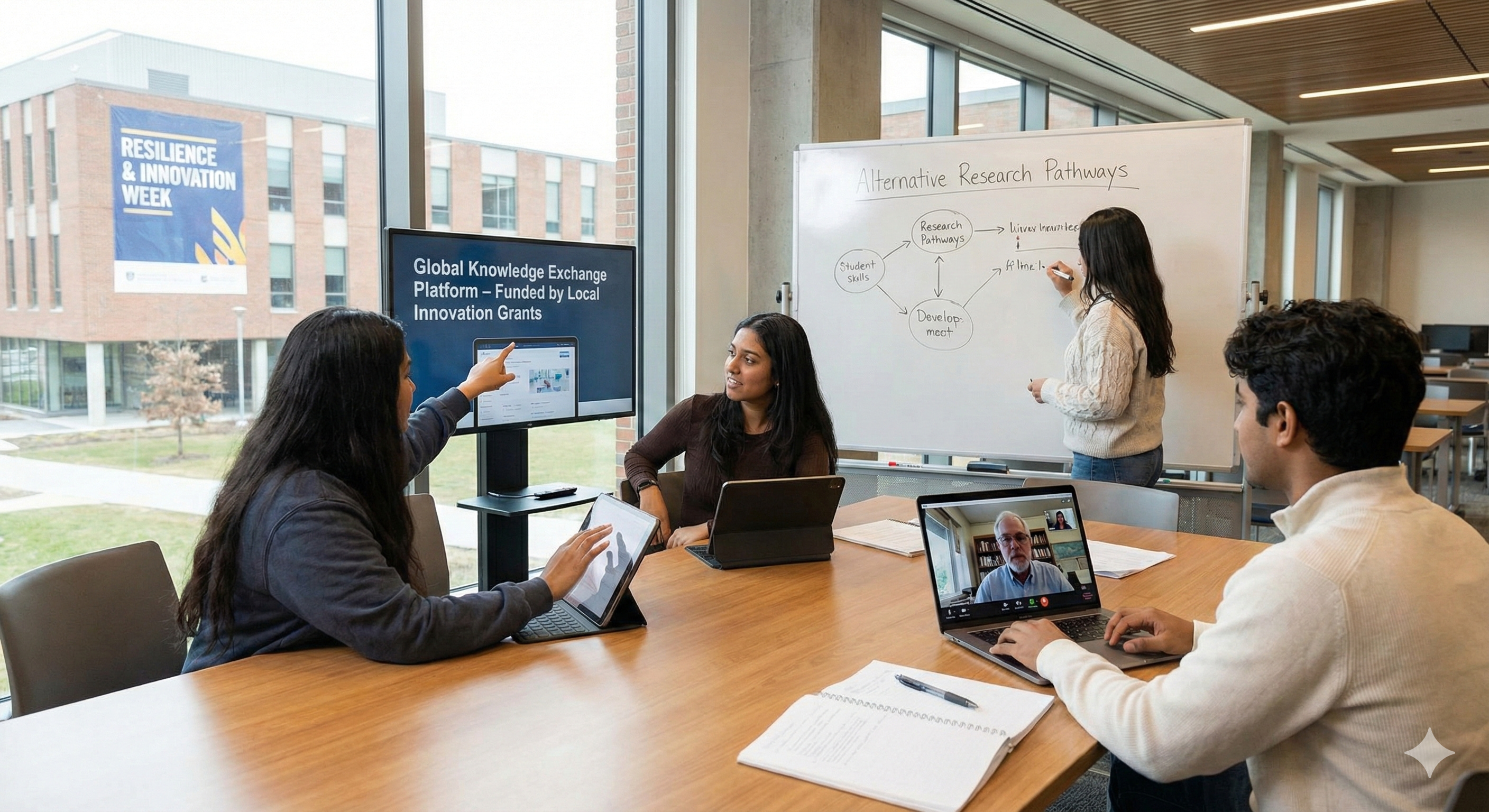
International sanctions often introduce significant academic research restrictions and limit access to critical scholarly resources. Yet, within these challenges lies an opportunity for academic communities to evolve and innovate. Sanctions compel institutions and researchers to develop adaptive strategies, fostering resilience and resourcefulness that can lead to long-term growth and diversified collaborations. While sanctions reduce access to some global academic networks and funding streams, they also encourage the formation of local and regional partnerships. These partnerships nurture vibrant, like-minded communities focused on shared goals and mutual support. Researchers and students become more engaged in harnessing available resources creatively, emphasizing quality over quantity in their academic endeavors. Key impacts of international sanctions on studies include:

International sanctions create formidable barriers to global education by restricting academic partnerships and hindering student exchange programs. These restrictions limit the flow of ideas and resources essential for academic growth, curtailing opportunities for diverse collaboration. Technological exchanges and access to innovative educational tools are also significantly impacted in sanctioned regions, further deepening the divide between institutions. The challenges extend beyond funding and partnerships, touching critical aspects like visa limitations and cultural exchange restrictions. Educational communities face hurdles that impede seamless cross-border collaboration, stalling progress and diminishing mutual learning chances. Key barriers imposed by sanctions include:

International sanctions impose stringent constraints on university funding, critically limiting financial resources that support research projects and educational initiatives. These restrictions often disrupt grant opportunities and impede financial transactions, leaving institutions struggling to secure adequate funding. Consequently, academic freedom suffers as universities face challenges in sustaining diverse research programs and maintaining global partnerships. Access to scholarly journals and global research networks becomes restricted under sanctions, creating significant barriers for faculty and students. This limitation hinders the flow of ideas and resources essential for academic growth and innovation. Researchers in sanctioned regions often experience isolation, reducing their ability to participate in cross-border collaborations that enrich study quality and broaden perspectives. Below is a summary of key funding issues and their impacts:
In this challenging environment, platforms like Journey offer a crucial hub for academics and institutions facing financial constraints. Journey’s vibrant and customizable communities enable like-minded researchers and educators to connect, share resources, and explore alternative funding opportunities. By fostering authentic engagement and continuous knowledge exchange, Journey supports academic resilience and long-term growth despite the limitations imposed by sanctions.

International sanctions introduce critical barriers to student mobility and international exchanges, deeply affecting academic and cultural enrichment. Visa limitations become a central challenge, preventing students from sanctioned regions from accessing study programs abroad. These restrictions, coupled with reduced scholarship availability, create financial obstacles that further limit educational opportunities. As a result, many promising students face curtailed access to global learning environments. Mobility programs suffer significant setbacks, with fewer exchange initiatives and diminished pathways to international accreditation. The ripple effect impacts not only individual students but entire academic communities, disrupting the flow of diverse ideas and experiences. These barriers stifle the mutual growth that comes from immersive cross-border education and collaboration. Key factors contributing to these challenges include:

Sanctions have repeatedly reshaped academic landscapes in sanctioned countries, as illustrated in the detailed case studies found in works like How Sanctions Work: Iran and the Impact of Economic Warfare. This book highlights how sanctions imposed on Iran since 1979 have influenced not only economic policies but also the education system. Experts emphasize that sanctions disrupt the recruitment of international faculty, limit research output, and restrict access to scholarly publishing avenues, thereby isolating academic communities and curtailing intellectual exchange. The broader implications extend beyond Iran. Statistical data and academic insights show noticeable declines in research collaborations and student participation in countries facing sanctions. These embargo effects create structural challenges for universities, including difficulties in maintaining international partnerships and reduced opportunities for faculty mobility. Experts debate whether these impacts represent temporary setbacks or long-term shifts in global academic dynamics. Specific cases where sanctions have profoundly affected education systems include:

Educational institutions facing international sanctions have embraced adaptive strategies to sustain growth and academic resilience. Diversifying funding sources has become a crucial approach. Universities increasingly seek local grants, private partnerships, and alternative international donors. This diversification helps cushion the impact of traditional funding cuts and enables continued research and program development despite financial constraints. Policy-driven educational changes have also been central to adapting academic frameworks. Institutions revise curricula to align with new realities, focusing on regional relevance and practical skills. Fostering local and regional collaborations has become a priority, creating robust academic networks that reduce reliance on restricted international partnerships. Additionally, leveraging digital platforms has proven vital, enabling seamless communication and resource sharing across borders even when physical exchanges are limited. Key adaptive strategies include:
.png)
International sanctions will likely continue reshaping global education by limiting traditional study avenues and encouraging digital collaboration. As physical academic exchanges face growing restrictions, the role of technology becomes central to maintaining international education accessibility. Digital platforms emerge as critical hubs that enable seamless global knowledge exchange and foster robust international academic alliances despite geopolitical barriers. The increasing reliance on online education and virtual communities highlights the essence of platforms like Journey. By offering well-maintained, safe, and trustworthy environments, Journey supports academics and students worldwide in sustaining authentic connections. Its customizable community tools and AI-powered management encourage rich interaction and continuous engagement, bridging gaps created by sanctions and nurturing vibrant global academic networks. Future scenarios to consider include:
Navigating the complexities of global sanctions, academic institutions face myriad challenges. From restricted research opportunities to barriers in international collaboration, the impact is profound. Yet, resilience thrives in adaptive strategies and digital innovations. Embracing alternative solutions and digital platforms like Journey is vital for sustaining educational and research endeavors.
As international sanctions evolve, their influence on studies remains significant. However, fostering a digitally-connected academic community offers hope. Harnessing technology for education bridging divides and inspiring constructive change. In this new educational landscape, embracing resilience and innovation ensures progress and global connectivity.
A: International sanctions influence academic studies by limiting research opportunities, restricting access to academic resources, and reducing funding. Sanctions also disrupt collaborations and can isolate academic communities, impacting study quality.
A: Sanctions affect mortality rates by impeding economic growth and access to medical resources, which may increase age-specific mortality in affected populations due to reduced healthcare access.
A: Sanctions create global education barriers by restricting cross-border academic partnerships, technological exchanges, and student mobility, making international collaboration more challenging.
A: Sanctions reduce university funding by restricting financial transactions and access to international research grants, which in turn affects access to scholarly journals and research opportunities.
A: Sanctions limit student mobility by imposing visa restrictions, reducing scholarships, and curtailing exchange programs, affecting academic and cultural enrichment opportunities.
A: Case studies, such as those from countries like Iran and North Korea, reveal significant declines in research collaboration and academic participation due to restrictions imposed by sanctions.
A: Institutions respond to sanctions by seeking alternative funding, fostering local collaborations, leveraging digital platforms, and revising curricula to maintain educational resilience.